
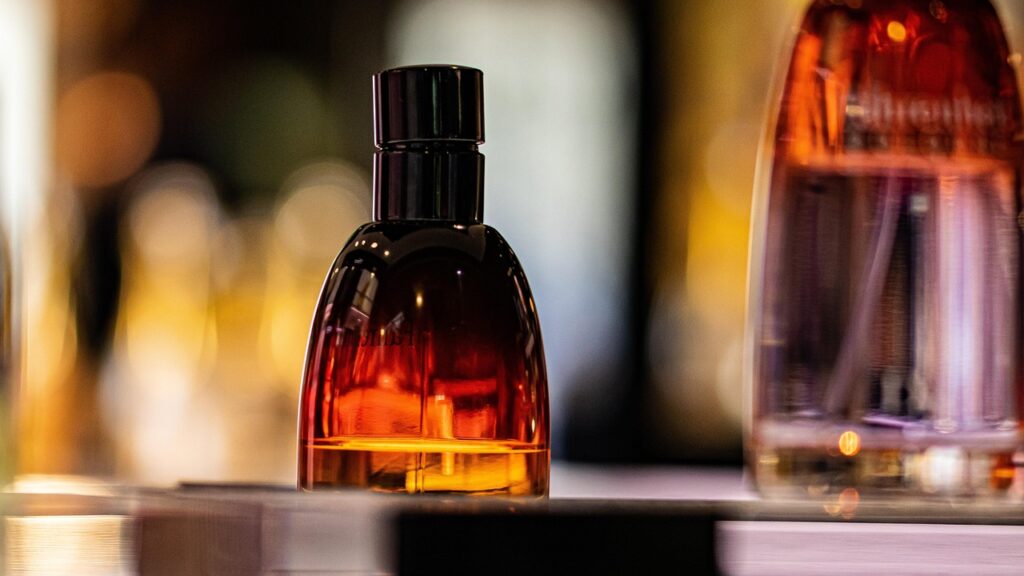
Perfume is an ancient olfactory art that has traversed the ages and always occupied an important place in human culture, from the civilizations of Egypt, Greece, or Rome where its use was primarily linked to therapeutic purposes, to our present era where it is a symbol of personal identity and luxury. It represents approximately 50 billion on the world market in 2024[1], but it is more than a mere commercial product: perfume is a true olfactory work of art. Yet, to this day, perfume is still not recognized as a protectable work under copyright law.
I. Smell: the sense neglected by the law
A. A potential protection under the law
Article L112-2 of the French Intellectual Property Code lists the works protected by copyright, all of which are perceptible through the senses of sight and hearing: absent are the chemical senses of taste and smell. However, the use of the word “notably” implies that the list is not closed. Moreover, Article L112-1 CPI prohibits any form of discrimination between intellectual works.
Fragrance is therefore a work that could potentially be protected under intellectual property law. However, in practice, the current judicial case law is rather opposed to this possibility.
B. Protection denied by case law
Indeed, one observes a significant divergence between trial judges and the French High Court. As early as 1975, the judges of the Paris Court of Appeal asserted that the law did not exclude works other than those perceptible by sight or hearing, thereby implicitly including the other three senses.[2] More explicitly, in 2004 judges recognized fragrance as a work of the mind.[3] By contrast, the judges of the High Court systematically opposed recognizing perfume as a protectable work under copyright law. In 2006, the Civil Chamber of the French High Court held that fragrance, being the “mere implementation of know-how,” did not constitute the creation of a perceptible form of expression.[4] Finally, the most recent case law from the Commercial Chamber of the French High Court aligns with this precedent, refusing protection on the grounds that copyright cannot protect perfume since it is not identifiable with sufficient precision to permit its communication.[5] To be protected, a work must be original and have a perceptible form: the High Court denies protection to perfume on the basis that this latter condition is lacking.
Nevertheless, it is too early to despair: these rulings still leave the door open to potential protection. According to the judges, it would suffice for the form of perfume to be identifiable so as to permit its communication and thus its protection. However, this necessarily requires technical progress.
II. A future protection requiring technical progress
As André and Henri-Jacques Lucas rightly wrote in doctrine, “no objection, in our view, justifies an exclusion in principle […] the creator’s approach is of the same nature as in the field of visual and musical arts.” [6]
Indeed, perfume is a work of art in its own right. It is an assemblage of chemistry and creativity, each component of perfume being carefully chosen by the master perfumer: from the elaboration of its formula with raw odorous materials, to blending, and finally to bottling. It is a work endowed with originality, as creators continually strive to adapt to current trends. Nevertheless, regarding the requirement of the “perceptible form”, the Court in 2013 considered – wrongly in our opinion – that perfume expressed itself only through its sensory form and was not sufficiently identifiable with precision, and therefore unfit to be given a “perceptible form”.
This decision is debatable, for the sense of smell is excluded without real justification: why not admit it, when works of sight and hearing possess expressive form? The mere fact that perfume can be described both by professionals called “Noses” and by an “average consumer” demonstrates the existence of an “perceptible form”. If one can attach words, expressions, emotions to a fragrance, to a scent, to something apparently abstract, then perfume is indeed a creative work endowed with an identifiable “perceptible form”; to rule otherwise would be contra legem[7], especially since perfume concretely has a material support: the liquid, the wax of a candle.[8]
Certainly, not everyone perceives the senses in the same way. Smell will be more or less developed depending on individuals, just as sight or hearing may be more or less developed for others. Should the fact that smell is a sense appreciated by an “elite” of people capable of perceiving and describing it justify its exclusion? Should it not be admitted on the same level as the other senses? We believe so: there is no reason to deny perfume copyright protection.
The Paris Tribunal de grande instance in 2004 affirmed in this sense that it did not matter whether the olfactory impression was fleeting or varied according to individuals.[9]
However, since the appreciation and assessment of the originality and form of a perfume require specific capacities that the judge may not necessarily possess, it would be appropriate to call upon an expert in aromas and perfumes. Such an expert would act like a handwriting expert whose task is to observe and compare letters to determine the author of a contested signature.
Once recognized as a work, perfume could benefit from legal protection under copyright law, but this could only occur through a reversal of case law.
The future of perfume protection can therefore still be salvaged, all the more so as smell is increasingly present in our societies, with the public becoming increasingly sensitive to both bad (olfactory nuisances) and good odors. Smell is constantly stimulated, and the industry/technology sector is even developing devices enabling the inhalation of different scents associated with images emitted by a virtual reality headset, or the creation of “ISMELL” odor printers capable of producing scents corresponding to what is displayed on screen. The unanimous recognition of smell as an essential sense, on the same level as sight and hearing, could change matters and lead judges to admit legal protection for perfume.
[1] Estimation à plus de 50 milliards pour l’année 2024 https://fr.statista.com/statistiques/505163/parfums-valeur-marche-mondial/
Estimation à 43,12 milliards pour l’année 2024 https://www.businessresearchinsights.com/fr/market-reports/perfumes-market-118192#:~:text=La%20taille%20du%20march%C3%A9%20des%20parfums%20%C3%A9tait%20%C3%A9valu%C3%A9e,compos%C3%A9%20%28TCAC%29%20d%27environ%208%2C5%25%20de%202025%20%C3%A0%202033.
[2] Paris, 4e ch., 3 juillet 1975.
[3] Paris, 4e ch., 17 septembre 2004 ; TGI Paris, 26 mai 2004.
[4] Cass. 1re civ., 13 juin 2006.
[5] Cass. Com., 10 déc. 2013.
[6] Traité de la propriété intellectuelle, LexisNexis, 4ème éd., 2012, p. 93
[7] Commentaire par Michel Vivant sous l’art L111-1 du Code de la Propriété Intellectuelle édition 2019 Lexis Nexis.
[8] Paris, 12 nov.2010 PIBD 2011, 931 III, 21/ V.ss 134 s. Manuel Droit d’auteur et droits voisins (2e édition) – Michel Vivant, Jean-Michel Bruguière- Dalloz-Grand format-Dalloz Librairie Paris.
[9] TGI Paris, 26 mai 2004.
